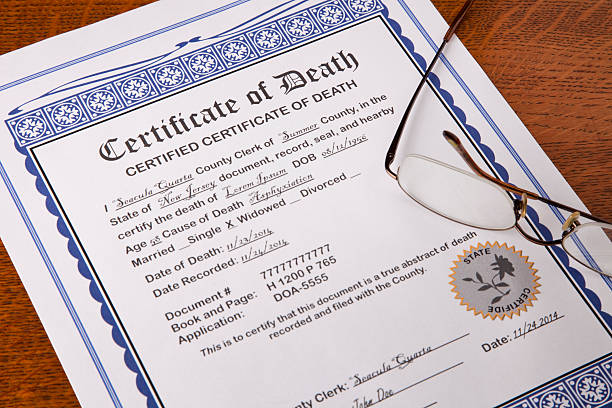
TL;DR Summary: After a loved one dies, you’ll need several certified copies of their death certificate to handle everything from closing bank accounts to transferring property. In California, you can request them through the funeral home, county recorder’s office, or the California Department of Public Health, each with different processing times and rules depending on who’s requesting them.
When a loved one passes away, family members are suddenly faced with a mountain of tasks, from planning the service to handling their financial affairs. One task you’ll need to complete quickly is obtaining a death certificate. This document is the key that unlocks nearly every part of the post-death process: claiming life insurance, transferring property, closing or transferring accounts, and eventually, administering or closing the trust or estate.
At Goff Legal, our experienced trust administration attorneys often meet families who are overwhelmed by the red tape that follows a death. So let’s make this simple. Below, we’ll explain how to get death certificates after a loved one’s death, how many you’ll need, who can order them, and what to do if you hit a snag.
Why You Need Death Certificates
A death certificate is the official state record confirming that a person has died. It’s issued by the local county vital records office once the death is registered, typically within 10 days of passing.
You’ll need certified copies for dozens of purposes, including:
- Transferring real estate held outside of a trust
- Accessing or closing bank and investment accounts
- Claiming life insurance or veterans’ benefits
- Settling credit card and loan balances
- Filing final tax returns
- Transferring vehicles at the DMV
- Submitting to Social Security, pension funds, or annuity providers
In short, if you’re the surviving spouse, child, or trustee, you’ll be asked for it many times throughout the trust administration process. Here’s what to do.
Step 1: Confirm Who Can Request a Death Certificate
California law protects personal information on death certificates. Only certain people can order certified copies (with the raised seal) that show all identifying details.
Eligible individuals include:
- A surviving spouse, domestic partner, parent, child, grandchild, or sibling
- A legal representative (such as the estate’s attorney or trustee)
- A funeral director handling the remains
- Anyone with a court order authorizing access
If you’re helping a parent or grandparent with an estate or trust administration but aren’t listed directly, you may need to show documentation (like your role as trustee or executor) to prove your authority.
Step 2: Decide How You’ll Order the Certificates
You have three main options in California for ordering death certificates:
Option 1: Through the Funeral Home
This is by far the easiest path for most families. After a death, the funeral director files the death certificate electronically with the county vital records office. During that process, they can request certified copies for you.
You simply tell them how many copies you’d like, pay the per-copy fee (usually around $24–$30 each), and they’ll mail them to you once available.
Pros:
- Simplest and fastest method (especially for immediate needs)
- The funeral home handles the paperwork
Cons:
- You must decide how many copies to order right away
- If you later need more, you’ll have to order directly from the county or state
Option 2: Directly from the County Recorder’s Office
If you didn’t order enough copies through the funeral home—or the death occurred months ago—you can order from the county recorder or health department in the county where the death occurred.
For example:
- Sacramento County Clerk-Recorder handles local requests at saccounty.gov
- Placer County Clerk-Recorder does the same at placer.ca.gov
Most counties allow you to:
- Apply in person (bring a valid photo ID)
- Mail in a notarized application (California law requires notarization for mailed requests)
- Order online through third-party services like VitalChek
Expect processing times from 1–3 weeks, depending on the county and volume.
Fees: Usually $24–$30 per copy (check the county’s current rate).
Option 3: From the California Department of Public Health (CDPH)
If you live out of state or the death occurred several years ago, you can also request through the California Department of Public Health – Vital Records Division.
Their website provides downloadable forms, mailing instructions, and fees. Processing times here are the slowest, often 10–12 weeks, so it’s not ideal for urgent needs.
Use this route mainly for historical or long-past deaths, not recent ones tied to estate administration.
Step 3: Determine How Many Copies You’ll Need
This is one of the most common questions we hear from widows and adult children: “How many copies should I get?” The honest answer: more than you think.
Here’s a rule of thumb:
| Purpose | Typical Copies Needed |
| Life insurance policies | 1–2 |
| Each bank or investment account | 1 |
| Pension / retirement benefits | 1 |
| Real estate transfers (outside trust) | 1 per property |
| Vehicle transfers | 1 |
| Tax filings and final returns | 1 |
| Personal records / family archives | 1 |
Most families should start with 8–12 certified copies. You can always order more later, but they’ll take time and additional fees.
Step 4: Understand “Certified” vs. “Informational” Copies
California issues two versions: a “Certified Authorized” copy and an “Informational” copy. Here’s the difference:
Certified Authorized Copy
- Contains all personal information
- Accepted by courts, financial institutions, and government agencies
- Only available to eligible requestors (spouse, child, executor, trustee, etc.)
Informational Copy
- Marked “Informational – Not a Valid Document to Establish Identity”
- Anyone can order one (useful for genealogical research or recordkeeping)
- Not valid for legal or financial transactions
If you’re handling estate or trust administration, you’ll always need the certified authorized version.
Step 5: What to Do if There’s an Error
Sometimes, errors happen: misspelled names, incorrect birthdates, or wrong addresses. These can cause major delays with banks, insurance, or title companies.
If you spot an error:
- Contact the funeral home (if they prepared the certificate).
- Request a correction affidavit. You’ll likely need supporting documents (like a birth certificate or ID).
- Submit the corrected information through the county recorder or CDPH.
Corrections can take several weeks, so it’s best to verify details early, ideally before ordering a large batch of copies.
Step 6: Store Your Death Certificates Safely
Each certified copy is an official legal document. Treat them as you would a passport or trust deed.
Tips for safekeeping:
- Keep originals in a secure but accessible location (like a home safe or fireproof lockbox).
- Provide your attorney or trustee with one copy.
- Scan or photocopy for personal records, but remember: digital copies aren’t legally valid.
Step 7: Know When You Might Need Help
Grief and paperwork are a tough combination. Many widows or adult children start off thinking they can handle it all, only to find themselves tangled in confusing estate processes.
That’s where Goff Legal can help.
If your loved one had a trust, you’ll need to present certified death certificates to begin trust administration. If they didn’t have one, you might be facing probate, where certified copies are also required for the court.
Our experienced team guides California families through these exact moments- helping you organize assets, transfer property, and close out accounts efficiently and compassionately.
You don’t have to do this alone.
Common Pitfalls to Avoid
Here are some common mistakes to avoid:
- Ordering too few copies: You’ll end up waiting weeks for more when you need them urgently.
- Using the wrong version: “Informational” copies won’t work for legal matters.
- Missing the notarization requirement: Mail-in requests without a notarized form are automatically rejected.
- Requesting from the wrong county: Always order from the county where the death occurred, not where the person lived.
- Waiting too long: Some banks or institutions require death certificates within a specific timeframe to process claims smoothly.
How Goff Legal Supports Families After a Death
At Goff Legal, our boutique firm specializes in trust administration and estate settlement for California families.
Here’s how we can help during this process:
- Review your loved one’s estate plan or trust
- Identify how many certified death certificates you’ll need for each asset
- Communicate directly with financial institutions and title companies
- Handle legal filings, notices, and distribution paperwork
- Guide you through closing the estate while minimizing delays and stress
Our goal is simple: to give you clarity and confidence during a difficult season, so you can focus on healing, not bureaucracy.
Seek Legal Counsel
If you recently lost a spouse or parent and are unsure what to do next, Goff Legal’s experienced trust administration attorneys can help you take the next steps with compassion and expertise.
Contact Goff Legal today for a free discovery call. We’ll review your situation, help you determine what documents you need, and guide you through the trust administration process, from start to finish.
FAQs About California Death Certificates
How long after death are death certificates available in California?
Typically within 1–2 weeks after the death is registered by the funeral home. However, holidays or corrections can delay issuance.
Can I get a death certificate from a different county than where the person lived?
No. You must request it from the county where the death occurred, not where the deceased resided.
What if my loved one passed away out of state but lived in California?
You’ll need to request the death certificate from the state where the death occurred, then use it for California estate or trust matters.
Can my attorney or financial advisor order copies for me?
Yes, if you sign an authorization or if they are acting in an official representative capacity (like a trustee, executor, or attorney of record).
How long should I keep death certificates?
Indefinitely. Even years later, you may need them for tax audits, real estate transactions, or family recordkeeping.
Goff Legal, PC is a woman-owned boutique California law firm dedicated to guiding clients through the complexities of Estate Planning, Trust Administration, and Probate. Led by attorney Alexandria “Ali” Goff, we provide personalized legal services designed to protect families, preserve legacies, and bring peace of mind.
Written by Goff Legal, PC